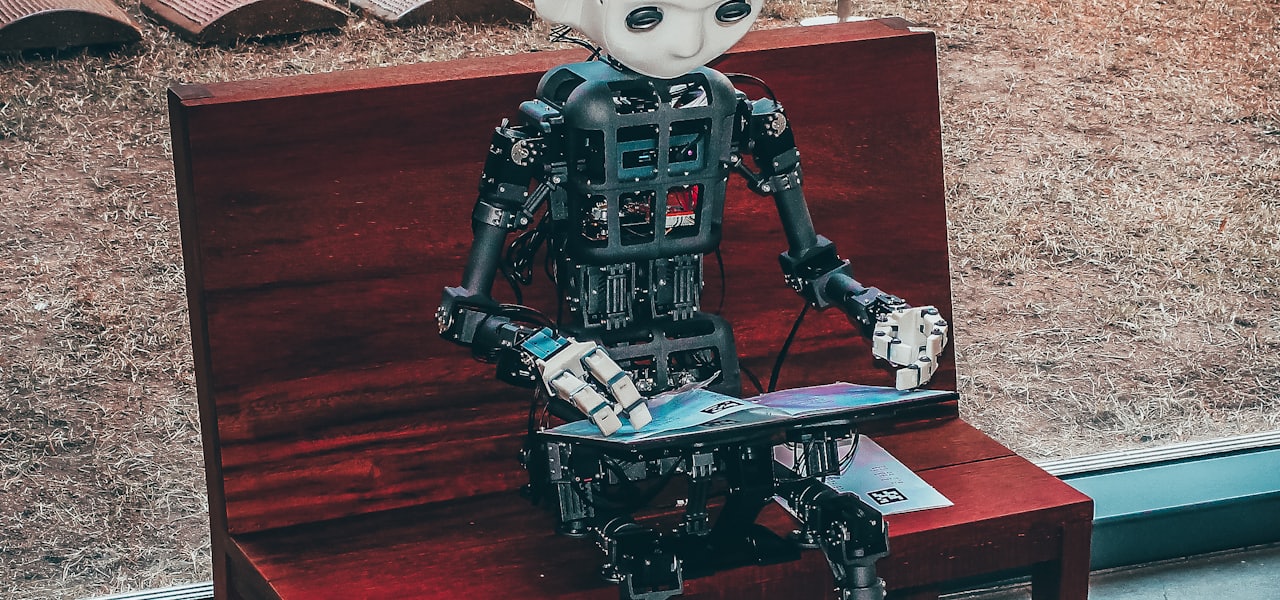
Adversarial machine learning is the study of the attacks on machine learning algorithms, and of the defenses against such attacks. Machine learning techniques are mostly designed to work on specific problem sets, under the assumption that the training and test data are generated from the same statistical distribution (IID). However, this assumption is often violated in practical high-stake applications, where users may intentionally supply fabricated data that violates the statistical assumption. Most common attacks in adversarial machine learning include evasion attacks, data poisoning attacks, Byzantine attacks and model extraction. == History == At the MIT Spam Conference in January 2004, John Graham-Cumming showed that a machine-learning spam filter could be used to defeat another machine-learning spam filter by automatically learning which words to add to a spam email to get the email classified as not spam. In 2004, Nilesh Dalvi and others noted that linear classifiers used in spam filters could be defeated by simple "evasion attacks" as spammers inserted "good words" into their spam emails. (Around 2007, some spammers added random noise to fuzz words within "image spam" in order to defeat OCR-based filters.) In 2006, Marco Barreno and others published "Can Machine Learning Be Secure?", outlining a broad taxonomy of attacks. As late as 2013 many researchers continued to hope that non-linear classifiers (such as support vector machines and neural networks) might be robust to adversaries, until Battista Biggio and others demonstrated the first gradient-based attacks on such machine-learning models (2012–2013). In 2012, deep neural networks began to dominate computer vision problems; starting in 2014, Christian Szegedy and others demonstrated that deep neural networks could be fooled by adversaries, again using a gradient-based attack to craft adversarial perturbations. Further work would show that adversarial attacks are harder to produce in uncontrolled environments, due to the different environmental constraints that cancel out the effect of noise. For example, any small rotation or slight illumination on an adversarial image can destroy the adversariality. In addition, researchers such as Google Brain's Nick Frosst point out that it is much easier to make self-driving cars miss stop signs by physically removing the sign itself, rather than creating adversarial examples. Frosst also believes that the adversarial machine learning community incorrectly assumes models trained on a certain data distribution will also perform well on a completely different data distribution. He suggests that a new approach to machine learning should be explored, and is currently working on a unique neural network that has characteristics more similar to human perception than state-of-the-art approaches. While adversarial machine learning continues to be heavily rooted in academia, large tech companies such as Google, Microsoft, and IBM have begun curating documentation and open source code bases to allow others to concretely assess the robustness of machine learning models and minimize the risk of adversarial attacks. === Examples === Examples include attacks in spam filtering, where spam messages are obfuscated through the misspelling of "bad" words or the insertion of "good" words; attacks in computer security, such as obfuscating malware code within network packets or modifying the characteristics of a network flow to mislead intrusion detection; attacks in biometric recognition where fake biometric traits may be exploited to impersonate a legitimate user; or to compromise users' template galleries that adapt to updated traits over time. Researchers showed that by changing only one-pixel it was possible to fool deep learning algorithms. Others 3-D printed a toy turtle with a texture engineered to make Google's object detection AI classify it as a rifle regardless of the angle from which the turtle was viewed. Creating the turtle required only low-cost commercially available 3-D printing technology. A machine-tweaked image of a dog was shown to look like a cat to both computers and humans. A 2019 study reported that humans can guess how machines will classify adversarial images. Researchers discovered methods for perturbing the appearance of a stop sign such that an autonomous vehicle classified it as a merge or speed limit sign. A data poisoning filter called Nightshade was released in 2023 by researchers at the University of Chicago. It was created for use by visual artists to put on their artwork to corrupt the data set of text-to-image models, which usually scrape their data from the internet without the consent of the image creator. McAfee attacked Tesla's former Mobileye system, fooling it into driving 50 mph over the speed limit, simply by adding a two-inch strip of black tape to a speed limit sign. Adversarial patterns on glasses or clothing designed to deceive facial-recognition systems or license-plate readers, have led to a niche industry of "stealth streetwear". An adversarial attack on a neural network can allow an attacker to inject algorithms into the target system. Researchers can also create adversarial audio inputs to disguise commands to intelligent assistants in benign-seeming audio; a parallel literature explores human perception of such stimuli. Clustering algorithms are used in security applications. Malware and computer virus analysis aims to identify malware families, and to generate specific detection signatures. In the context of malware detection, researchers have proposed methods for adversarial malware generation that automatically craft binaries to evade learning-based detectors while preserving malicious functionality. Optimization-based attacks such as GAMMA use genetic algorithms to inject benign content (for example, padding or new PE sections) into Windows executables, framing evasion as a constrained optimization problem that balances misclassification success with the size of the injected payload and showing transferability to commercial antivirus products. Complementary work uses generative adversarial networks (GANs) to learn feature-space perturbations that cause malware to be classified as benign; Mal-LSGAN, for instance, replaces the standard GAN loss with a least-squares objective and modified activation functions to improve training stability and produce adversarial malware examples that substantially reduce true positive rates across multiple detectors. == Challenges in applying machine learning to security == Researchers have observed that the constraints under which machine-learning techniques function in the security domain are different from those of common benchmark domains. Security data may change over time, include mislabeled samples, or reflect adversarial behavior, which complicates evaluation and reproducibility. === Data collection issues === Security datasets vary across formats, including binaries, network traces, and log files. Studies have reported that the process of converting these sources into features can introduce bias or inconsistencies. In addition, time-based leakage can occur when related malware samples are not properly separated across training and testing splits, which may lead to overly optimistic results. === Labeling and ground truth challenges === Malware labels are often unstable because different antivirus engines may classify the same sample in conflicting ways. Ceschin et al. note that families may be renamed or reorganized over time, causing further discrepancies in ground truth and reducing the reliability of benchmarks. === Concept drift === Because malware creators continuously adapt their techniques, the statistical properties of malicious samples also change. This form of concept drift has been widely documented and may reduce model performance unless systems are updated regularly or incorporate mechanisms for incremental learning. === Feature robustness === Researchers differentiate between features that can be easily manipulated and those that are more resistant to modification. For example, simple static attributes, such as header fields, may be altered by attackers, while structural features, such as control-flow graphs, are generally more stable but computationally expensive to extract. === Class imbalance === In realistic deployment environments, the proportion of malicious samples can be extremely low, ranging from 0.01% to 2% of total data. This unbalanced distribution causes models to develop a bias towards the majority class, achieving high accuracy but failing to identify malicious samples. Prior approaches to this problem have included both data-level solutions and sequence-specific models. Methods like n-gram and Long Short-Term Memory (LSTM) networks can model sequential data, but their performance has been shown to decline significantly when malware samples are realistically proportioned in the training set, demonstrating the limitations in
Mobile simulator
A mobile simulator is a software application for a personal computer which creates a virtual machine version of a mobile device, such as a mobile phone, iPhone, other smartphone, or calculator, on the computer. This may sometimes also be termed an emulator. The mobile simulator allows the user to use features and run applications on the virtual mobile on their computer as though it was the actual mobile device. A mobile simulator lets you test a website and determine how well it performs on various types of mobile devices. A good simulator tests mobile content quickly on multiple browsers and emulates several device profiles simultaneously. This allows analysis of mobile content in real-time, locate errors in code, view rendering in an environment that simulates the mobile browser, and optimize the site for performance. Mobile simulators may be developed using programming languages such as Java, .NET and JavaScript.
Cyclodisparity
In vision science, cyclodisparity is the difference in the rotation angle of an object or scene viewed by the left and right eyes. Cyclodisparity can result from the eyes' torsional rotation (cyclorotation) or can be created artificially by presenting to the eyes two images that need to be rotated relative to each other for binocular fusion to take place. == Human and animal vision == The eyes and visual system can compensate for cyclodisparity up to a certain point; if the cyclodisparity is larger than a threshold, the images cannot be fused, resulting stereoblindness, and in double vision in subjects who otherwise have full stereo vision. When a human subject is presented with images that have artificial cyclodisparity, cyclovergence is evoked, that is, a motor response of the eye muscles that rotates the two eyes in opposite directions, thereby reducing cyclodisparity. Visually-induced cyclovergence of up to 8 degrees has been observed in normal subjects. Furthermore, up to about 8 degrees can usually be compensated by purely sensory means, that is, without physical eye rotation. This means that the normal human observer can achieve binocular image fusion in presence of cyclodisparity of up to approximately 16 degrees. Cyclodisparity due to images having been rotated inward can be compensated better when the gaze is directed downwards, and cyclodisparity due to an outward rotation can be compensated better when the gaze is directed upwards. A proposed explanation for this phenomenon is that the motor system is coordinated in such a way that the eyes perform a torsional movement to reduce the size of the search zones and thus the computational load required for solving the correspondence problem. The resulting cyclovergence at near gaze is smaller than the cyclovergence predicted by Listing's law. == Video processing and computer vision == Active camera torsion can be used in machine and computer vision for several purposes. For instance, camera torsion can be used to make improved use of the search range over which matching detectors or stereo matching algorithms operate, or to make a 3D slanted surface appear frontoparallel for further stereo processing. For image compression purposes, images with cyclodisparity are advantageously encoded using global motion compensation using a rotational motion model.
Association for Computational Linguistics
The Association for Computational Linguistics (ACL) is a scientific and professional organization for people working on natural language processing. Its namesake conference is one of the primary high impact conferences for natural language processing research, along with EMNLP. The conference is held each summer in locations where significant computational linguistics research is carried out. It was founded in 1962, originally named the Association for Machine Translation and Computational Linguistics (AMTCL). It became the ACL in 1968. The ACL has a European (EACL), a North American (NAACL), and an Asian (AACL) chapter. == History == The ACL was founded in 1962 as the Association for Machine Translation and Computational Linguistics (AMTCL). The initial membership was about 100. In 1965, the AMTCL took over the journal Mechanical Translation and Computational Linguistics. This journal was succeeded by many other journals: the American Journal of Computational Linguistics (1974–1978, 1980–1983), and then Computational Linguistics (1984–present). Since 1988, the journal has been published for the ACL by MIT Press. The annual meeting was first held in 1963 in conjunction with the Association for Computing Machinery National Conference. The annual meeting was, for a long time, relatively informal and did not publish anything longer than abstracts. By 1968, the society took on its current name, the Association for Computational Linguistics (ACL). The publication of the annual meeting's Proceedings of the ACL began in 1979 and gradually matured into its modern form. Many of the meetings were held in conjunction with the Linguistic Society of America, and a few with the American Society for Information Science and the Cognitive Science Society. The United States government sponsored much research from 1989 to 1994, characterized by an increase in author retention rates and an increase in research in some key topics, such as speech recognition, in ACL. By the 21st century, it was able to maintain authors at a high rate who coalesced in a more stable arrangement around individual research topics. In 1991, the group published a prototype for a text generator based on the universal grammar theory of Noam Chomsky. The system, nicknamed Parrot, relied on a finite set of syntactic transformations and a hand-curated lexicon. Despite some initial success, including experimentation with morpheme syntactics, funding halted after the research team encountered intractable difficulties with inflection and abstract locutions. == Annual Meeting of the ACL == Every year, the ACL holds the Annual Meeting of the ACL. The location lies in Europe in years zero modulo three, North America in years one modulo three, and Asia–Australia in years two modulo three. In 2020, the Annual Meeting received for the first time more submissions from China than the United States. == Activities == The ACL organizes several of the top conferences and workshops in the field of computational linguistics and natural language processing. These include: Annual Meeting of the Association for Computational Linguistics (ACL), the flagship conference of the organization Empirical Methods in Natural Language Processing (EMNLP) International Joint Conference on Natural Language Processing (IJCNLP), held jointly one of the other conferences on a rotating basis Conference on Computational Natural Language Learning (CoNLL) Lexical and Computational Semantics and Semantic Evaluation (SemEval) Joint Conference on Lexical and Computational Semantics (SEM) Workshop on Statistical Machine Translation (WMT) Besides conferences, the ACL also sponsors the journals Computational Linguistics and Transactions of the Association for Computational Linguistics (TACL). Papers and other presentations at ACL and ACL-affiliated venues are archived online in the open-access ACL Anthology. == Special Interest Groups == ACL has a large number of Special Interest Groups (SIGs), focusing on specific areas of natural language processing. Some current SIGs within ACL are: == Presidents == Each year, the ACL elects a distinguished computational linguist who becomes vice-president of the organization in the next calendar year and president one year later. Recent ACL presidents are:
Recursive transition network
A recursive transition network ("RTN") is a graph theoretical schematic used to represent the rules of a context-free grammar. RTNs have application to programming languages, natural language and lexical analysis. Any sentence that is constructed according to the rules of an RTN is said to be "well-formed". The structural elements of a well-formed sentence may also be well-formed sentences by themselves, or they may be simpler structures. This is why RTNs are described as recursive. == Notes and references ==
Seq2seq
Seq2seq is a family of machine learning approaches used for natural language processing. Originally developed by Lê Viết Quốc, a Vietnamese computer scientist and a machine learning pioneer at Google Brain, this framework has become foundational in many modern AI systems. Applications include language translation, image captioning, conversational models, speech recognition, and text summarization. Seq2seq uses sequence transformation: it turns one sequence into another sequence. == History == One naturally wonders if the problem of translation could conceivably be treated as a problem in cryptography. When I look at an article in Russian, I say: 'This is really written in English, but it has been coded in some strange symbols. I will now proceed to decode. seq2seq is an approach to machine translation (or more generally, sequence transduction) with roots in information theory, where communication is understood as an encode-transmit-decode process, and machine translation can be studied as a special case of communication. This viewpoint was elaborated, for example, in the noisy channel model of machine translation. In practice, seq2seq maps an input sequence into a real-numerical vector by using a neural network (the encoder), and then maps it back to an output sequence using another neural network (the decoder). The idea of encoder-decoder sequence transduction had been developed in the early 2010s. The papers most commonly cited as the originators that produced seq2seq are two papers from 2014. In the seq2seq as proposed by them, both the encoder and the decoder were LSTMs. This had the "bottleneck" problem, since the encoding vector has a fixed size, so for long input sequences, information would tend to be lost, as they are difficult to fit into the fixed-length encoding vector. The attention mechanism, proposed in 2014, resolved the bottleneck problem. They called their model RNNsearch, as it "emulates searching through a source sentence during decoding a translation". A problem with seq2seq models at this point was that recurrent neural networks are difficult to parallelize. The 2017 publication of Transformers resolved the problem by replacing the encoding RNN with self-attention Transformer blocks ("encoder blocks"), and the decoding RNN with cross-attention causally-masked Transformer blocks ("decoder blocks"). === Priority dispute === One of the papers cited as the originator for seq2seq is (Sutskever et al 2014), published at Google Brain while they were on Google's machine translation project. The research allowed Google to overhaul Google Translate into Google Neural Machine Translation in 2016. Tomáš Mikolov claims to have developed the idea (before joining Google Brain) of using a "neural language model on pairs of sentences... and then [generating] translation after seeing the first sentence"—which he equates with seq2seq machine translation, and to have mentioned the idea to Ilya Sutskever and Quoc Le (while at Google Brain), who failed to acknowledge him in their paper. Mikolov had worked on RNNLM (using RNN for language modelling) for his PhD thesis, and is more notable for developing word2vec. == Architecture == The main reference for this section is. === Encoder === The encoder is responsible for processing the input sequence and capturing its essential information, which is stored as the hidden state of the network and, in a model with attention mechanism, a context vector. The context vector is the weighted sum of the input hidden states and is generated for every time instance in the output sequences. === Decoder === The decoder takes the context vector and hidden states from the encoder and generates the final output sequence. The decoder operates in an autoregressive manner, producing one element of the output sequence at a time. At each step, it considers the previously generated elements, the context vector, and the input sequence information to make predictions for the next element in the output sequence. Specifically, in a model with attention mechanism, the context vector and the hidden state are concatenated together to form an attention hidden vector, which is used as an input for the decoder. The seq2seq method developed in the early 2010s uses two neural networks: an encoder network converts an input sentence into numerical vectors, and a decoder network converts those vectors to sentences in the target language. The Attention mechanism was grafted onto this structure in 2014 and is shown below. Later it was refined into the encoder-decoder Transformer architecture of 2017. === Training vs prediction === There is a subtle difference between training and prediction. During training time, both the input and the output sequences are known. During prediction time, only the input sequence is known, and the output sequence must be decoded by the network itself. Specifically, consider an input sequence x 1 : n {\displaystyle x_{1:n}} and output sequence y 1 : m {\displaystyle y_{1:m}} . The encoder would process the input x 1 : n {\displaystyle x_{1:n}} step by step. After that, the decoder would take the output from the encoder, as well as the
Harris corner detector
The Harris corner detector is a corner detection operator that is commonly used in computer vision algorithms to extract corners and infer features of an image. It was first introduced by Chris Harris and Mike Stephens in 1988 upon the improvement of Moravec's corner detector. Compared to its predecessor, Harris' corner detector takes the differential of the corner score into account with reference to direction directly, instead of using shifting patches for every 45 degree angles, and has been proved to be more accurate in distinguishing between edges and corners. Since then, it has been improved and adopted in many algorithms to preprocess images for subsequent applications. == Introduction == A corner is a point whose local neighborhood stands in two dominant and different edge directions. In other words, a corner can be interpreted as the junction of two edges, where an edge is a sudden change in image brightness. Corners are the important features in the image, and they are generally termed as interest points which are invariant to translation, rotation and illumination. Although corners are only a small percentage of the image, they contain the most important features in restoring image information, and they can be used to minimize the amount of processed data for motion tracking, image stitching, building 2D mosaics, stereo vision, image representation and other related computer vision areas. In order to capture the corners from the image, researchers have proposed many different corner detectors including the Kanade-Lucas-Tomasi (KLT) operator and the Harris operator which are most simple, efficient and reliable for use in corner detection. These two popular methodologies are both closely associated with and based on the local structure matrix. Compared to the Kanade-Lucas-Tomasi corner detector, the Harris corner detector provides good repeatability under changing illumination and rotation, and therefore, it is more often used in stereo matching and image database retrieval. Although there still exist drawbacks and limitations, the Harris corner detector is still an important and fundamental technique for many computer vision applications. == Development of Harris corner detection algorithm == Source: Without loss of generality, we will assume a grayscale 2-dimensional image is used. Let this image be given by I {\displaystyle I} . Consider taking an image patch ( x , y ) ∈ W {\displaystyle (x,y)\in W} (window) and shifting it by ( Δ x , Δ y ) {\displaystyle (\Delta x,\Delta y)} . The sum of squared differences (SSD) between these two patches, denoted f {\displaystyle f} , is given by: f ( Δ x , Δ y ) = ∑ ( x k , y k ) ∈ W ( I ( x k , y k ) − I ( x k + Δ x , y k + Δ y ) ) 2 {\displaystyle f(\Delta x,\Delta y)={\underset {(x_{k},y_{k})\in W}{\sum }}\left(I(x_{k},y_{k})-I(x_{k}+\Delta x,y_{k}+\Delta y)\right)^{2}} I ( x + Δ x , y + Δ y ) {\displaystyle I(x+\Delta x,y+\Delta y)} can be approximated by a Taylor expansion. Let I x {\displaystyle I_{x}} and I y {\displaystyle I_{y}} be the partial derivatives of I {\displaystyle I} , such that I ( x + Δ x , y + Δ y ) ≈ I ( x , y ) + I x ( x , y ) Δ x + I y ( x , y ) Δ y {\displaystyle I(x+\Delta x,y+\Delta y)\approx I(x,y)+I_{x}(x,y)\Delta x+I_{y}(x,y)\Delta y} This produces the approximation f ( Δ x , Δ y ) ≈ ∑ ( x , y ) ∈ W ( I x ( x , y ) Δ x + I y ( x , y ) Δ y ) 2 , {\displaystyle f(\Delta x,\Delta y)\approx {\underset {(x,y)\in W}{\sum }}\left(I_{x}(x,y)\Delta x+I_{y}(x,y)\Delta y\right)^{2},} which can be written in matrix form: f ( Δ x , Δ y ) ≈ ( Δ x Δ y ) M ( Δ x Δ y ) , {\displaystyle f(\Delta x,\Delta y)\approx {\begin{pmatrix}\Delta x&\Delta y\end{pmatrix}}M{\begin{pmatrix}\Delta x\\\Delta y\end{pmatrix}},} where M is the structure tensor, M = ∑ ( x , y ) ∈ W [ I x 2 I x I y I x I y I y 2 ] = [ ∑ ( x , y ) ∈ W I x 2 ∑ ( x , y ) ∈ W I x I y ∑ ( x , y ) ∈ W I x I y ∑ ( x , y ) ∈ W I y 2 ] {\displaystyle M={\underset {(x,y)\in W}{\sum }}{\begin{bmatrix}I_{x}^{2}&I_{x}I_{y}\\I_{x}I_{y}&I_{y}^{2}\end{bmatrix}}={\begin{bmatrix}{\underset {(x,y)\in W}{\sum }}I_{x}^{2}&{\underset {(x,y)\in W}{\sum }}I_{x}I_{y}\\{\underset {(x,y)\in W}{\sum }}I_{x}I_{y}&{\underset {(x,y)\in W}{\sum }}I_{y}^{2}\end{bmatrix}}} == Process of Harris corner detection algorithm == Commonly, Harris corner detector algorithm can be divided into five steps. Color to grayscale Spatial derivative calculation Structure tensor setup Harris response calculation Non-maximum suppression === Color to grayscale === If we use Harris corner detector in a color image, the first step is to convert it into a grayscale image, which will enhance the processing speed. The value of the gray scale pixel can be computed as a weighted sums of the values R, B and G of the color image, ∑ C ∈ { R , G , B } w C ⋅ C {\displaystyle \sum _{C\,\in \,\{R,G,B\}}w_{C}\cdot C} , where, e.g., w R = 0.299 , w G = 0.587 , w B = 1 − ( w R + w G ) = 0.114. {\displaystyle w_{R}=0.299,\ w_{G}=0.587,\ w_{B}=1-(w_{R}+w_{G})=0.114.} === Spatial derivative calculation === Next, we are going to find the derivative with respect to x and the derivative with respect to y, I x ( x , y ) {\displaystyle I_{x}(x,y)} and I y ( x , y ) {\displaystyle I_{y}(x,y)} . This can be approximated by applying Sobel operators. === Structure tensor setup === With I x ( x , y ) {\displaystyle I_{x}(x,y)} , I y ( x , y ) {\displaystyle I_{y}(x,y)} , we can construct the structure tensor M {\displaystyle M} . === Harris response calculation === For x ≪ y {\displaystyle x\ll y} , one has x ⋅ y x + y = x 1 1 + x / y ≈ x . {\displaystyle {\tfrac {x\cdot y}{x+y}}=x{\tfrac {1}{1+x/y}}\approx x.} In this step, we compute the smallest eigenvalue of the structure tensor using that approximation: λ min ≈ λ 1 λ 2 ( λ 1 + λ 2 ) = det ( M ) tr ( M ) {\displaystyle \lambda _{\min }\approx {\frac {\lambda _{1}\lambda _{2}}{(\lambda _{1}+\lambda _{2})}}={\frac {\det(M)}{\operatorname {tr} (M)}}} with the trace t r ( M ) = m 11 + m 22 {\displaystyle \mathrm {tr} (M)=m_{11}+m_{22}} . Another commonly used Harris response calculation is shown as below, R = λ 1 λ 2 − k ( λ 1 + λ 2 ) 2 = det ( M ) − k tr ( M ) 2 {\displaystyle R=\lambda _{1}\lambda _{2}-k(\lambda _{1}+\lambda _{2})^{2}=\det(M)-k\operatorname {tr} (M)^{2}} where k {\displaystyle k} is an empirically determined constant; k ∈ [ 0.04 , 0.06 ] {\displaystyle k\in [0.04,0.06]} . === Non-maximum suppression === In order to pick up the optimal values to indicate corners, we find the local maxima as corners within the window which is a 3 by 3 filter. == Improvement == Sources: Harris-Laplace Corner Detector Differential Morphological Decomposition Based Corner Detector Multi-scale Bilateral Structure Tensor Based Corner Detector == Applications == Image Alignment, Stitching and Registration 2D Mosaics Creation 3D Scene Modeling and Reconstruction Motion Detection Object Recognition Image Indexing and Content-based Retrieval Video Tracking